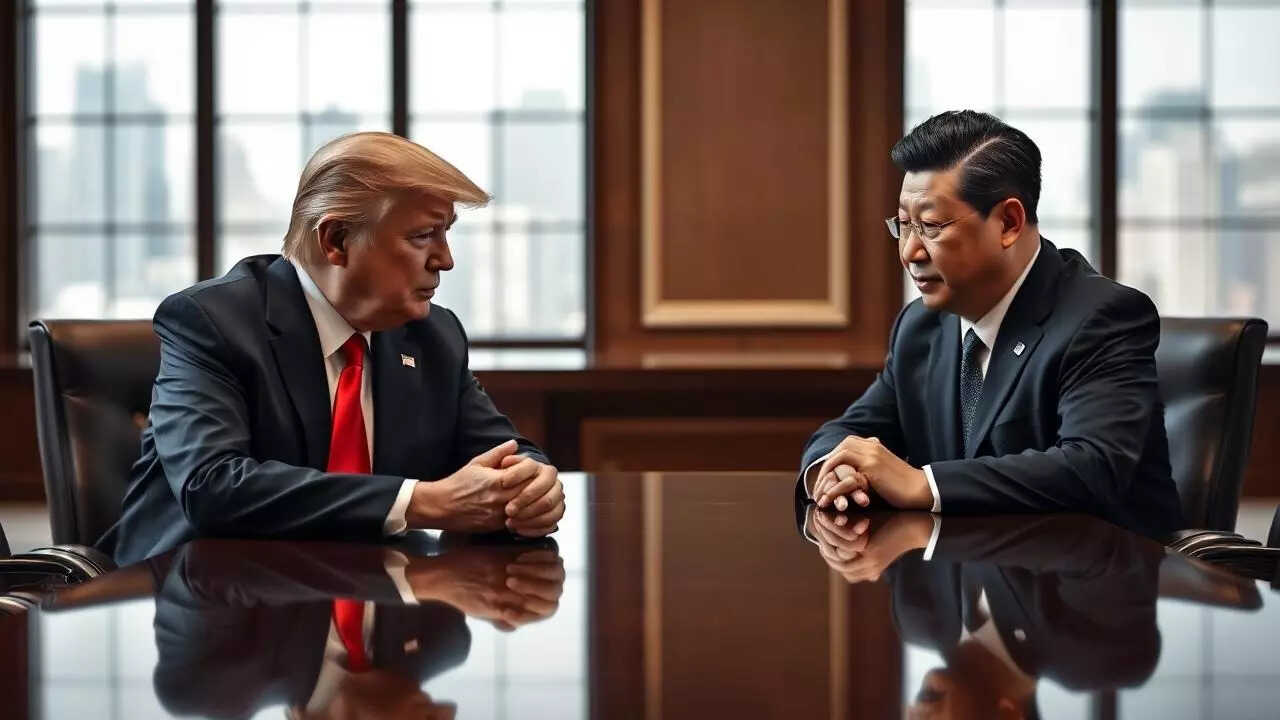
China’s top diplomat Wang Yi has called for the cessation of trade conflicts and highlighted the rise of a multipolar global order ahead of the highly anticipated meeting between President Donald Trump and President Xi Jinping. Wang’s remarks underscore China’s strategic positioning in evolving international relations as the two economic powers prepare for crucial talks.
China’s Wang Yi urges ending trade wars and highlights a shifting multipolar world ahead of the Trump-Xi summit to stabilize global economic and geopolitical relations.
BEIJING — On the eve of a pivotal meeting between U.S. President Donald Trump and Chinese President Xi Jinping, China’s Foreign Minister Wang Yi emphasized the need to end ongoing trade wars and underscored the coming shift toward a multipolar global landscape. Speaking at a press briefing on October 27, 2025, Wang cautioned that the international community must adapt to an era where multiple centers of power coexist rather than dominance by any single nation.
Wang remarked, “The multipolar world is coming, and cooperation rather than confrontation should guide international relations.” His comments came as Sino-American tensions have escalated due to tariff disputes, technology restrictions, and geopolitical rivalries that have unsettled global markets.
The upcoming Trump-Xi summit is widely seen as a critical juncture to potentially recalibrate bilateral ties after years marked by sanctions and trade barriers. Both countries, the world’s largest economies, are seeking avenues to stabilize cooperation amid competition.
Trade Wars and Economic Impact
China and the United States have been engaged in a tit-for-tat trade war since 2018 that has involved imposing billions of dollars in tariffs on goods ranging from steel to agricultural products. Wang Yi reiterated China’s position advocating for dialogue and mutual respect to resolve economic issues, warning that persistent trade conflicts threaten global economic growth and supply chain stability.
He stated, “Trade wars benefit no one. We urge all parties to exercise restraint, reduce tariffs, and create an environment conducive to free and fair trade.” Wang’s plea aligns with concerns expressed by economists and multinational business leaders about the adverse effects of protectionist policies on investment and consumer prices worldwide.
Emergence of a Multipolar World
The foreign minister also discussed the broader geopolitical environment, noting that international power structures are shifting. The post-World War II era dominated by U.S. influence is giving way to a multipolar arrangement featuring strong regional players including China, the European Union, India, and others.
“New dynamics are reshaping global governance and economic frameworks,” Wang explained. “Recognizing these changes is essential for sustainable peace and development.” Analysts interpret this as a statement supporting China’s pursuit of greater influence in multilateral institutions and global rule-making.
Implications for the Trump-Xi Meeting
The scheduled summit between Presidents Trump and Xi, set to take place in Beijing later this week, is anticipated to address the stalled trade negotiations, intellectual property concerns, and strategic issues such as cybersecurity and military presence in the Asia-Pacific region.
Wang Yi’s comments signal China’s openness to easing tensions but also highlight Beijing’s insistence on respect for its sovereignty and equitable treatment in global affairs. Observers expect that progress at the summit could signal a thaw in relations and potentially set new parameters for U.S.-China engagement amid complex challenges.
Conclusion
As the world watches, China’s Foreign Minister Wang Yi has framed the approaching Trump-Xi summit within the context of adapting to an evolving multipolar international order and the urgent need to halt trade wars. His statements underscore both the challenges and opportunities facing the two global powers as they navigate a path toward cooperation in a changing geopolitical landscape.