Paleontologists have discovered Chucarosaurus diripienda, an enormous titanosaur whose immense size reportedly caused infrastructural damage during excavation. This groundbreaking find is reshaping scientists’ approaches to studying titanosaurs and their impact on prehistoric ecosystems.
Discover the massive Chucarosaurus diripienda, a titanosaur that redefined dinosaur size limits and transformed scientific study of prehistoric giants.
In a remarkable paleontological breakthrough, researchers have unveiled Chucarosaurus diripienda, one of the largest titanosaurs ever identified. The discovery was announced on November 5, 2025, and has since captured the attention of the scientific community for its unprecedented size and ecological significance. Unearthed in Argentina, the fossils of Chucarosaurus diripienda reveal a massive sauropod that was so heavy it caused significant damage to the surrounding terrain, reportedly even fracturing roads during excavation efforts. This extraordinary finding challenges previous conceptions about the maximum size and impact of titanosaurs and is prompting a reevaluation of their biology and behavior.
Discovery and Excavation
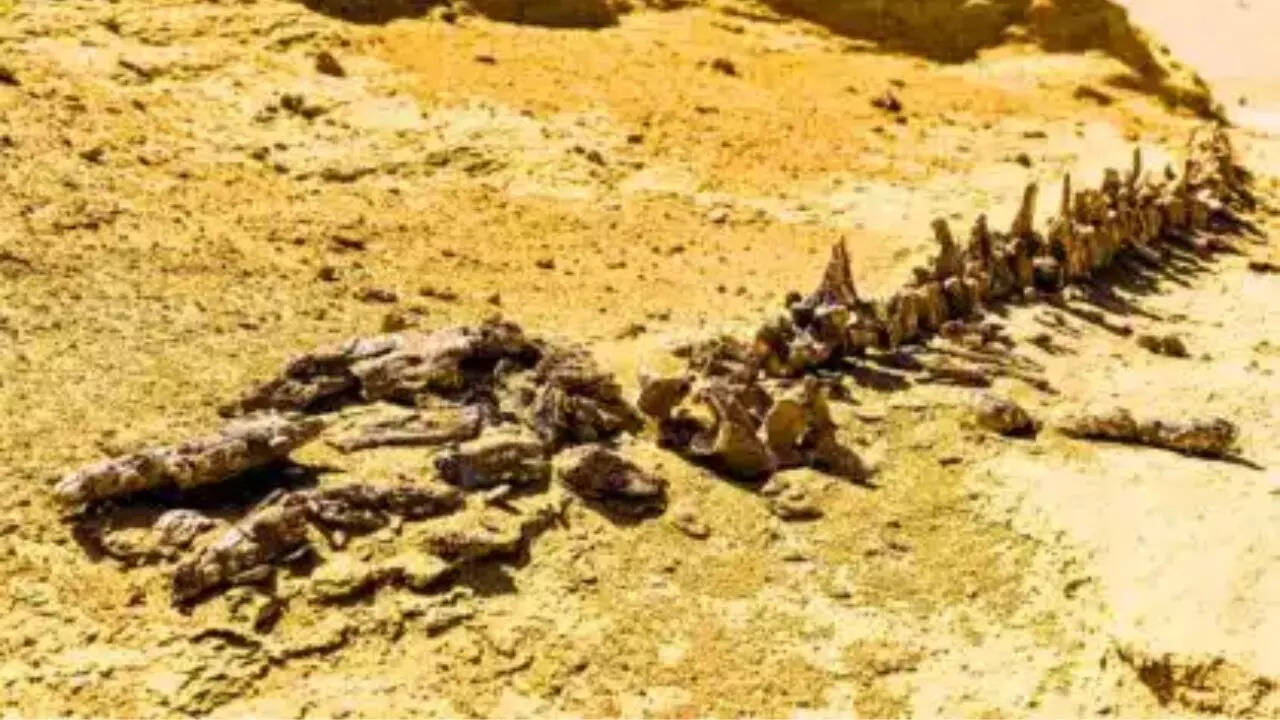
Chucarosaurus diripienda was excavated from sedimentary layers dating back to the Late Cretaceous period, approximately 85 million years ago, in the Neuquén Basin, a region famed for rich dinosaur fossil deposits. Paleontologists leading the dig reported preliminary challenges due to the dinosaur’s sheer mass. The fossilized bones, including vertebrae and limb elements, indicated an estimated length exceeding 30 meters and a weight reaching up to 70 metric tons. The overwhelming scale of the specimen led to practical difficulties, with local roads sustaining damage as heavy excavation equipment worked to safely retrieve the remains.
Scientific Implications
Titanosaurs represent a diverse group of sauropods, often characterized by their enormous size and wide geographic distribution during the Cretaceous. However, the discovery of Chucarosaurus diripienda compels scientists to reconsider the upper limits of titanosaur size and biomechanical capabilities. Dr. Maria Santiago, lead paleontologist on the excavation team, noted, “Chucarosaurus challenges our understanding of dinosaur gigantism. Its size and weight suggest adaptations we had not previously considered, influencing how these creatures moved and interacted with their environment.”
Moreover, the find has invigorated research into titanosaurian physiology and their role within prehistoric ecosystems. The implications extend to their feeding habits, reproductive strategies, and potential social behaviors, all factors that scientists are now investigating with renewed focus.
Techniques and Future Research
The excavation utilized cutting-edge ground-penetrating radar and drone technology to map the fossil site meticulously. Advanced 3D modeling and biomechanical simulations are underway to reconstruct the life appearance and movement of Chucarosaurus diripienda. Researchers expect that continuous study could also shed light on the paleoclimate conditions of the Late Cretaceous period in the Neuquén Basin.
These developments mark a significant shift from traditional approaches, which often underestimated the complexity of titanosaurs’ physiology and their environmental impact. Dr. Santiago emphasized, “Our findings underscore the importance of integrating new technologies with fieldwork to paint a comprehensive picture of these magnificent creatures.”
Conclusion
The discovery of Chucarosaurus diripienda not only enriches the fossil record but also revolutionizes scientific perspectives on titanosaur size limits, biomechanics, and ecological influence. As further research continues, this titanosaur will play a pivotal role in understanding the evolutionary pathways and environmental dynamics of some of Earth’s largest land animals during the Late Cretaceous.