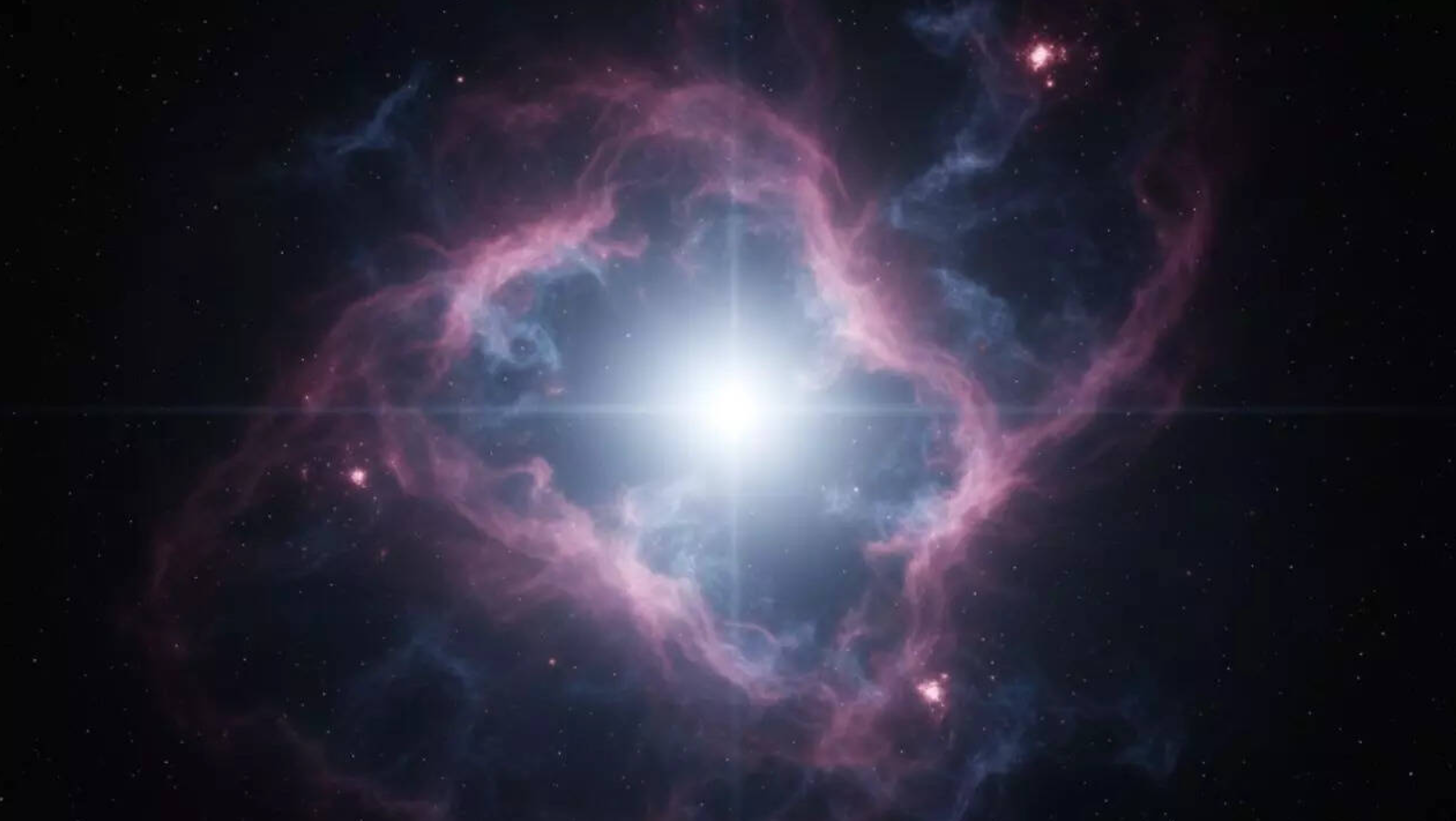
Astronomers have identified the most pristine star ever observed, providing unprecedented insights into the conditions of the early universe. This discovery offers valuable clues about the formation of the first stars and the chemical composition of the cosmos shortly after the Big Bang.
Astronomers discover the most pristine star ever found, revealing vital secrets about the universe’s early moments and the formation of the first stars.
Astronomers have discovered the most pristine star ever found, a breakthrough that unveils critical information about the universe’s first moments. The star was detected using advanced telescopes and spectroscopic analysis, revealing an exceptionally low presence of heavy elements. This unique composition suggests that the star formed shortly after the Big Bang, before the widespread creation of heavier elements through stellar processes.
The discovery was announced on October 10, 2025, by an international team of researchers working at observatories equipped with state-of-the-art instruments capable of detailed chemical analysis. Located in a distant region of the Milky Way, the star exhibits a chemical profile nearly identical to what theoretical models predict for Population III stars — the first generation of stars formed in the early universe.
Understanding the chemical makeup of this star helps scientists trace back the processes that occurred during the universe’s infancy. The near absence of metals, elements heavier than helium, indicates minimal pollution by previous stellar generations, providing a clearer glimpse into primordial cosmic conditions. This supports prevailing theories about the timeline of star formation and elemental synthesis following the Big Bang.
Dr. Anjali Singh, lead astronomer on the project, stated, “This pristine star is like a time capsule from the universe’s youth. Its uncommon purity allows us to study the fundamental building blocks that existed when the first stars ignited. We can learn about the processes that shaped the chemical evolution of the cosmos.”
The star’s discovery also has significant implications for cosmology and astrophysics. By studying such primordial objects, scientists can refine models of early star formation, galaxy evolution, and nucleosynthesis. The findings may improve understanding of how the first heavy elements emerged, eventually enabling the formation of planets and life.
This breakthrough was made possible by cutting-edge spectroscopic techniques, which analyze the star’s light to determine its elemental composition with unprecedented precision. The instruments measured absorption lines corresponding to various elements, confirming the star’s extraordinary purity and ancient origins.
Experts in the field have welcomed this finding as a milestone in studying the universe’s formative epochs. Dr. Michael Chu, an astrophysicist not involved in the research, commented, “Observing such a pristine star fills in crucial gaps in our cosmic timeline. It verifies key predictions of cosmological theories and opens new avenues for exploring the universe’s birth.
The discovery highlights the importance of next-generation telescopes and observational strategies aimed at locating and analyzing ancient stellar relics. As technology advances, additional pristine stars may be identified, further illuminating the early universe’s mysteries.
In conclusion, the identification of the most pristine star ever found offers valuable evidence about the universe’s primordial conditions. Its chemical composition aligns with expected profiles for the earliest stars, providing a tangible link to the cosmic dawn. This discovery enhances scientific understanding of how the first elements formed and how the universe evolved in its infancy.