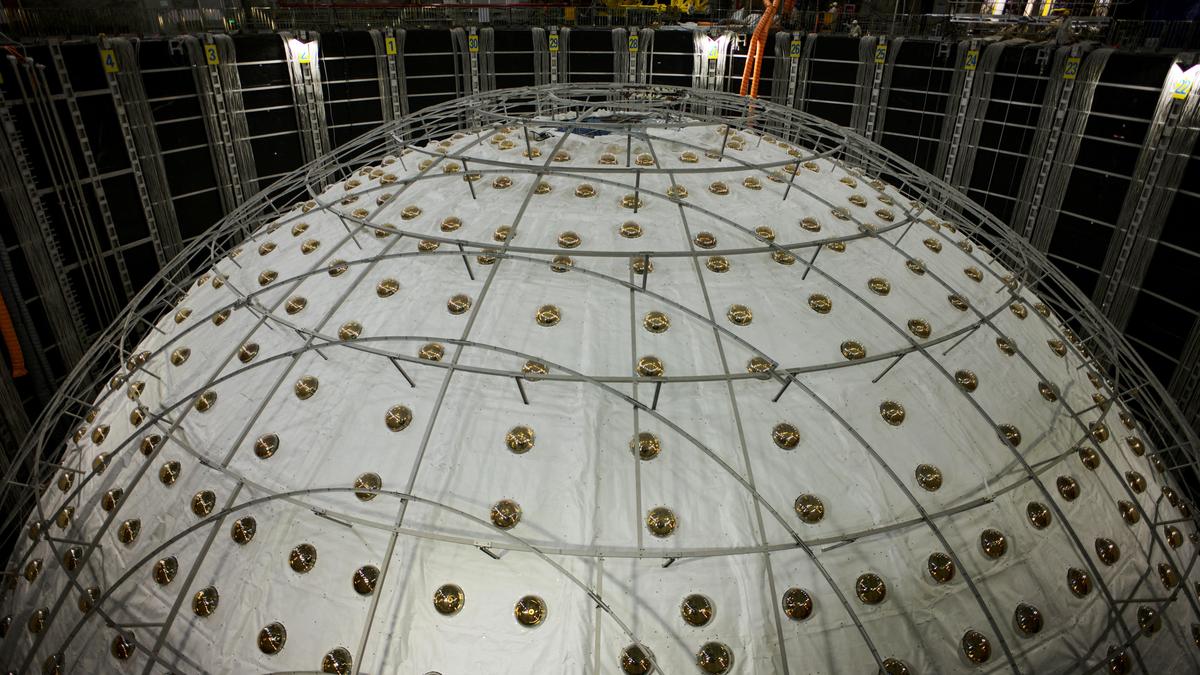
India’s ambitious neutrino observatory project, the Indian Neutrino Observatory (INO), faced numerous challenges and delays, contrasting with the successful launch and operation of NASA’s Juno mission to Jupiter. The article explores the developments, setbacks, and current status of India’s efforts in high-energy particle physics and space exploration.
India’s Indian Neutrino Observatory faces delays while NASA’s Juno mission successfully explores Jupiter, highlighting contrasts in scientific progress.
India’s pursuit of cutting-edge research in neutrino astronomy and space exploration has encountered contrasting trajectories with the Indian Neutrino Observatory (INO) project and NASA’s Juno mission. While INO, once envisioned as a landmark underground particle physics laboratory, has struggled due to bureaucratic delays and environmental concerns, the Juno spacecraft continues to provide unprecedented insights into Jupiter’s atmosphere and magnetic field.
The Indian Neutrino Observatory was first proposed in the early 2000s as an ambitious initiative to establish one of the world’s largest underground laboratories dedicated to studying neutrinos—elusive subatomic particles that can shed light on the fundamental properties of the universe. Planned to be constructed deep in the Theni district of Tamil Nadu, the facility aimed to host a massive magnetized iron calorimeter detector to detect atmospheric neutrinos.
However, despite nearly two decades of planning, the INO project has been mired in environmental clearances, public opposition, and funding controversies. Local communities expressed concerns over ecological impact, particularly regarding deforestation in sensitive Western Ghats regions. These issues, coupled with administrative inertia, prevented the project from materializing as initially planned.
In contrast, NASA’s Juno mission, launched in August 2011 and arriving at Jupiter in July 2016, has been an unequivocal success. Designed to study Jupiter’s composition, gravity field, magnetic field, and polar magnetosphere, Juno has transformed our understanding of the gas giant. Its findings have implications not only for planetary science but also for broader questions about the formation of the solar system.
India’s interest in such space missions reflects an increasing focus on participating in global scientific endeavors. While the INO project symbolizes the potential and challenges within India’s domestic particle physics research infrastructure, the continuous achievements of missions like Juno reinforce the importance of international collaboration and advanced technology.
Recent years have seen renewed discussions about reviving or reimagining the INO project with more sustainable approaches. Scientific communities remain hopeful that India will bolster its capabilities in neutrino physics and contribute significantly to this frontier area.
As the Juno mission continues its extended operations, delivering invaluable data on Jupiter, the parallel journey of India’s INO serves as a case study in the complexities of scientific development amidst environmental and bureaucratic challenges. Balancing scientific ambition with ecological responsibility will be crucial for India’s future projects in fundamental physics and space exploration.