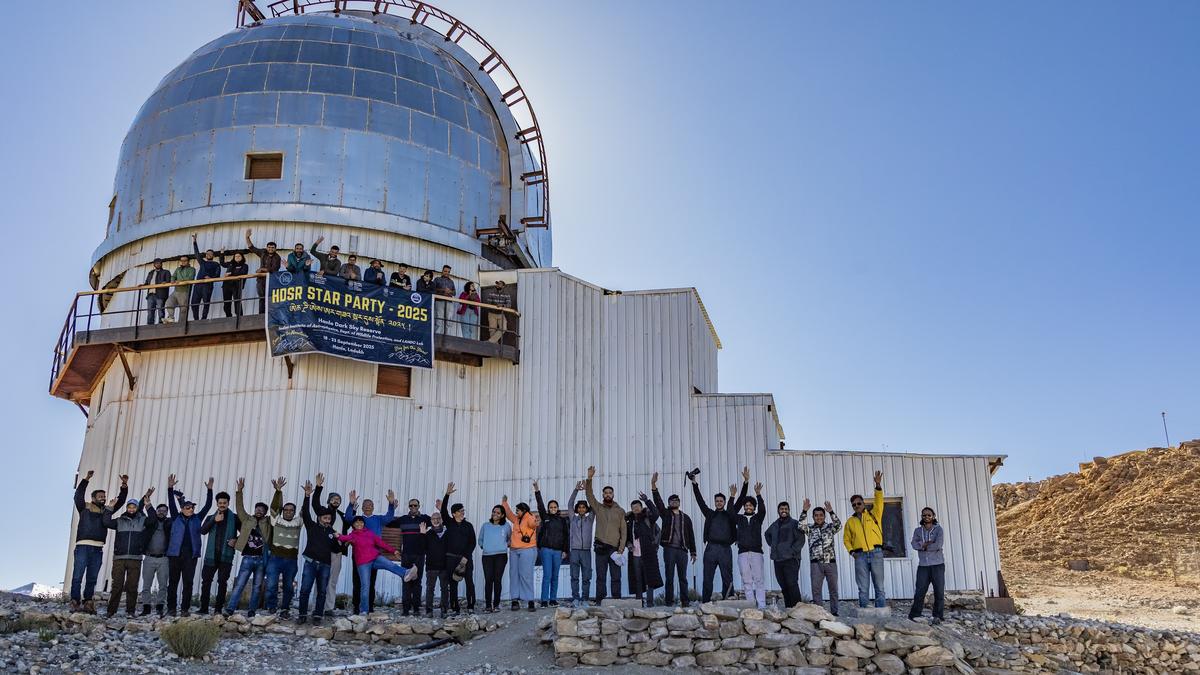
The remote village of Hanle in Ladakh is actively safeguarding its pristine night skies, enhancing its reputation as a prime destination for stargazing. These efforts support both scientific research and eco-tourism, fostering sustainable economic development in the region.
Hanle in Ladakh preserves its dark skies to promote stargazing, scientific research, and sustainable astro-tourism, fostering regional development.
Hanle, a remote village located in the Union Territory of Ladakh, India, is taking significant steps to protect its dark skies and develop a future centered around stargazing and astronomical research. Known for its exceptionally clear and unpolluted skies, Hanle has become a hub for scientists and tourists alike, capturing the imagination of astronomy enthusiasts across the globe. On October 26, 2025, local authorities, in collaboration with scientific institutions, emphasized their commitment to preserving this unique natural asset, aiming to foster sustainable economic growth through astro-tourism and scientific discovery.
The Strategic Importance of Hanle’s Dark Skies
Hanle is home to the Indian Astronomical Observatory, one of the world’s highest and most advanced astronomical observatories. Sitting at an elevation of over 4,500 meters above sea level, the area offers remarkably dark and clear skies, largely free from light pollution and atmospheric disturbances. This exceptional environment enables cutting-edge research in astrophysics and cosmology, attracting prominent researchers and institutions from across India and internationally.
Preserving Dark Skies Through Community Initiatives
To ensure the longevity of these pristine conditions, local communities and authorities have implemented a range of measures aimed at limiting light pollution. These include using low-intensity, shielded lighting in the village and surrounding areas, regulating vehicular movement at night, and promoting awareness about the importance of dark skies. The community’s active participation reflects a shared vision of balancing ecological preservation with socio-economic development.
“The darkness of our night sky is a priceless heritage,” said a spokesperson from the Ladakh Autonomous Hill Development Council. “Protecting it not only supports scientific research but also offers new avenues for sustainable livelihoods through eco-friendly tourism.”
Boosting Astro-tourism and Sustainable Development
In recent years, Hanle has seen a growing influx of tourists who are drawn by the prospects of night sky observation and astrophotography. Local businesses have started offering guided stargazing tours, accommodation focused on minimal environmental impact, and educational experiences related to astronomy. This emerging eco-tourism industry provides much-needed employment opportunities while encouraging conservation efforts.
Furthermore, collaborations between local authorities and academic institutions are promoting Hanle as a center for astronomical education and research. Workshops, seminars, and outreach programs are regularly conducted, bringing together scientists, students, and tourists to engage with the wonders of the cosmos.
Challenges and Future Prospects
Despite the promising developments, challenges remain in balancing increased visitor numbers with environmental preservation. Efforts continue to monitor and mitigate potential impacts such as waste management, infrastructure development, and maintaining strict light pollution regulations. Authorities plan to adopt smart lighting technologies and implement stricter policies to prevent encroachment on the protected skies.
Hanle’s initiative to protect its dark skies exemplifies a successful integration of science, community, and sustainable tourism. As the village enhances its profile as a global stargazing destination, it underscores the broader implications of conserving natural resources in fostering scientific knowledge and regional development.
In summary, Hanle’s vigilant protection of its dark skies positions it as a leading site for astronomical research and eco-tourism, contributing to sustainable growth and scientific advancement in Ladakh.