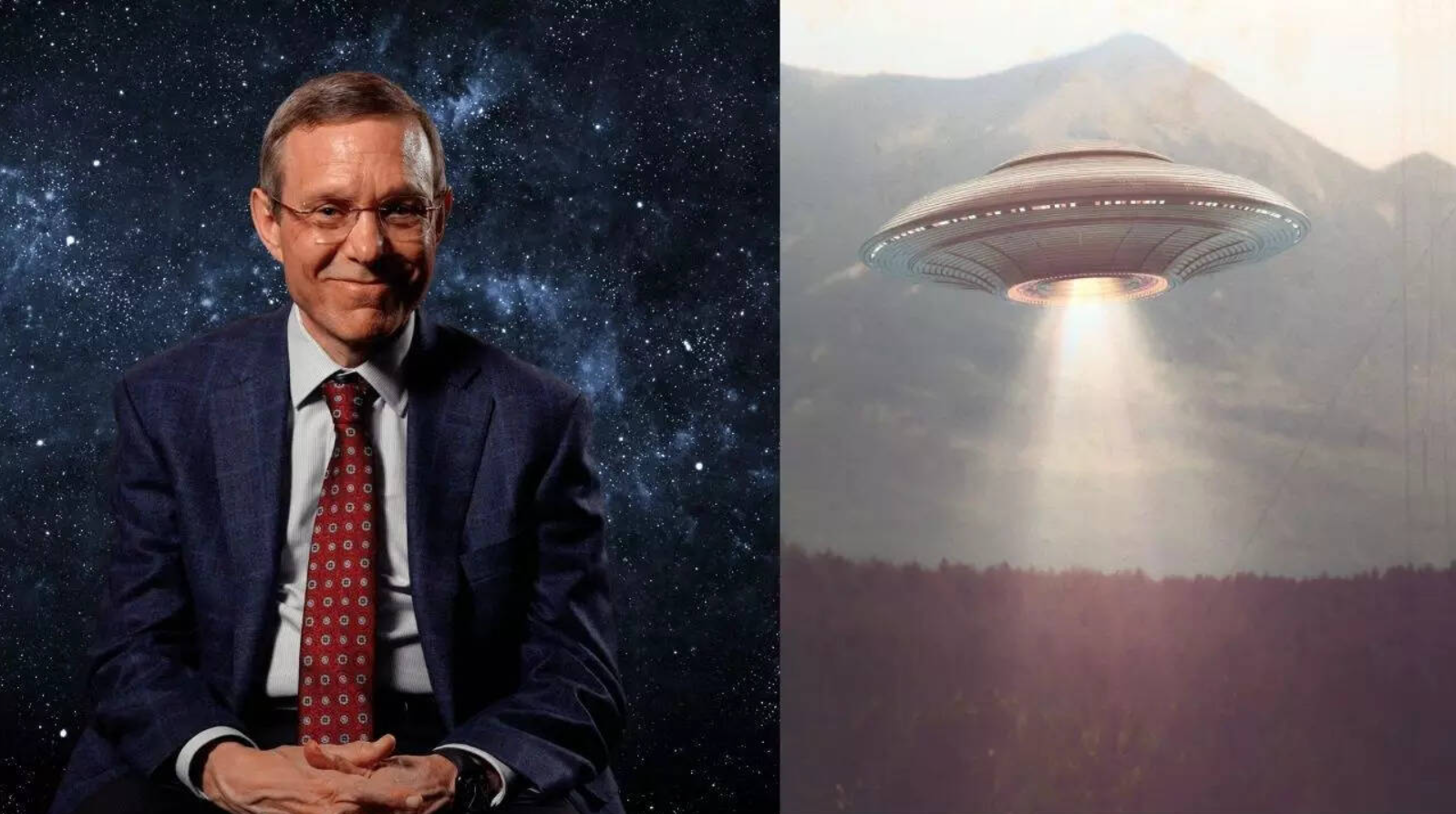
Harvard astronomer Avi Loeb has proposed that the recently observed interstellar object 3I/ATLAS could potentially be an alien spacecraft. This controversial claim adds to ongoing debates about the origins and nature of interstellar visitors to our solar system.
Harvard astronomer Avi Loeb suggests interstellar object 3I/ATLAS could be an alien spacecraft, sparking scientific debate about its origins.
In a recent announcement that has captured global attention, Harvard astrophysicist Avi Loeb posited that the interstellar object designated 3I/ATLAS might not be a natural celestial body but instead could be an alien spacecraft. This claim was made public on October 10, 2025, sparking renewed debates among astronomers and the scientific community about the nature of unidentified interstellar objects passing through our solar system. Avi Loeb, a prominent figure in astrophysics known for his willingness to explore unconventional hypotheses, made his assertions following detailed analysis of 3I/ATLAS, which was first observed entering the solar system earlier this year. The object exhibited unusual acceleration and trajectory patterns inconsistent with typical cometary or asteroidal behavior. ‘The characteristics of 3I/ATLAS, including its trajectory and acceleration, differ significantly from natural objects we’ve encountered,’ Loeb stated during a press briefing. ‘While extraordinary claims require extraordinary evidence, it is scientifically responsible to consider all possibilities, including the potential for artificial origin.’ The interstellar visitor 3I/ATLAS was detected by the Asteroid Terrestrial-impact Last Alert System (ATLAS) survey, which specializes in identifying near-Earth objects. Its designation, 3I, marks it as the third confirmed interstellar object recorded in our solar neighborhood after ‘Oumuamua in 2017 and comet Borisov in 2019. Unlike its predecessors, 3I/ATLAS displayed perplexing dynamics that prompted further scrutiny. Loeb’s hypothesis builds upon his earlier work involving ‘Oumuamua, where he controversially suggested that the object’s shape and acceleration might indicate an artificial origin. Critics within the astrophysics community have urged caution, emphasizing the necessity of rigorous data analysis to rule out natural explanations such as outgassing or solar radiation pressure effects. The debate raises broader questions about detection capabilities and the criteria used to distinguish between natural and artificial interstellar phenomena. Dr. Emily Chen, a planetary scientist unaffiliated with Loeb’s research, remarked, ‘While it is fascinating to consider extraterrestrial technology as an explanation, the scientific method demands that we exhaust all natural explanations first. Continued observation and data collection are critical.’ Loeb and his team advocate for increased investment in monitoring technologies and interdisciplinary research to better understand interstellar visitors. Their position highlights the importance of keeping open minds while adhering to stringent scientific protocols. The potential discovery of an alien spacecraft would have profound implications for humanity’s understanding of the universe and our place within it. For now, 3I/ATLAS remains an enigmatic visitor, illustrating the challenges astronomers face in deciphering signals from the cosmos with limited observational windows. As further studies proceed, the scientific community continues to analyze the data obtained from 3I/ATLAS, balancing intrigue with skepticism. The coming months are expected to yield more insights as researchers utilize space- and ground-based telescopes to track and characterize such phenomena.