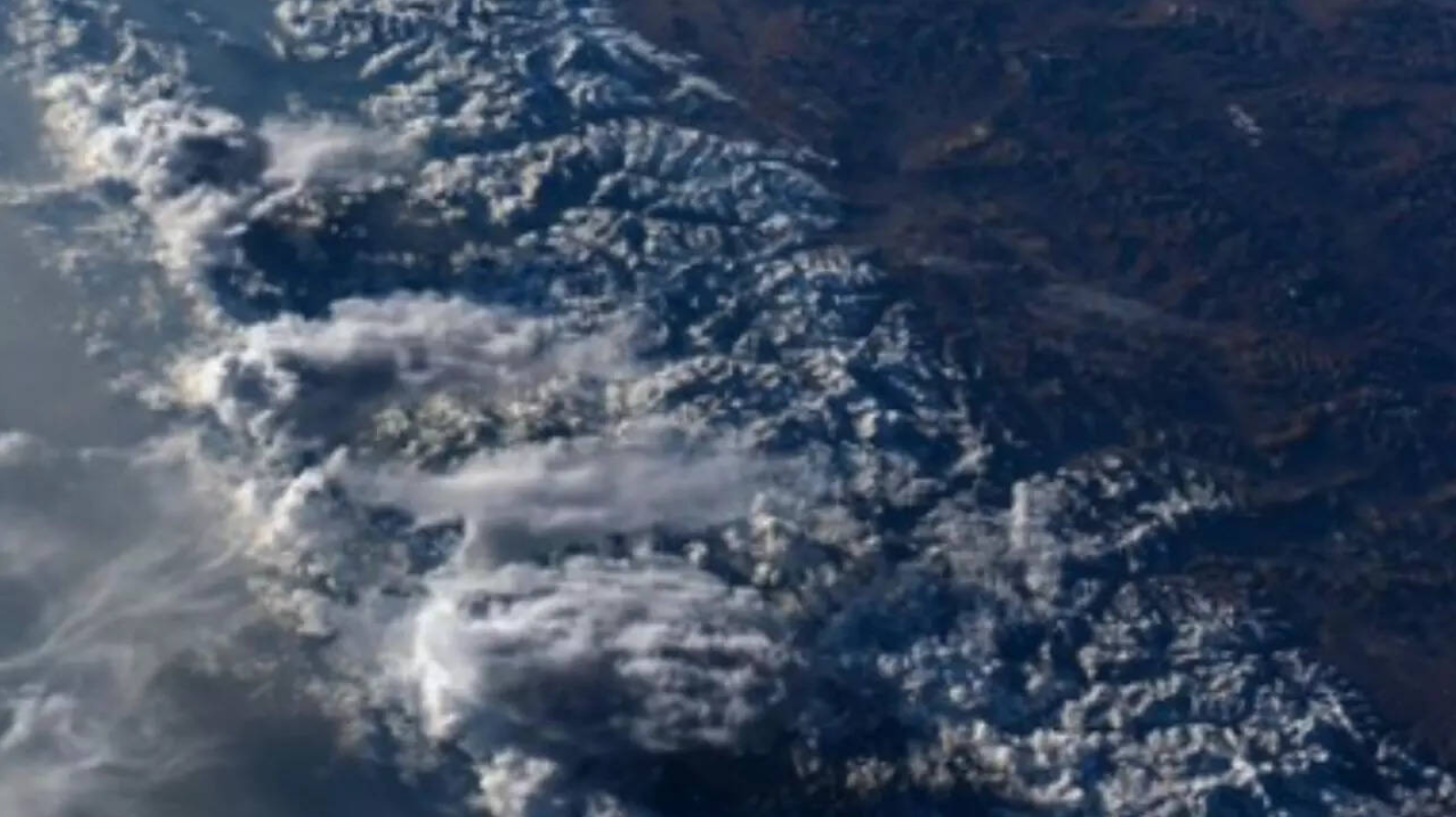
A NASA astronaut has shared a breathtaking photograph from space, revealing Mount Everest distinctly visible from the Indian state of Bihar. The remarkable image highlights the clarity of the Himalayas as captured from the International Space Station, sparking widespread interest and appreciation.
NASA astronaut shares stunning space image showing Mount Everest visible from Bihar, highlighting the Himalayas’ grandeur from the International Space Station.
In a striking demonstration of Earth’s natural grandeur, a NASA astronaut aboard the International Space Station (ISS) has shared a captivating image showcasing the Himalayas, with Mount Everest clearly visible from the vantage point over Bihar, India. The photograph, released on October 13, 2025, offers an extraordinary perspective of the world’s highest peak and its surrounding mountain range as seen from space.
The astronaut, whose identity has not been disclosed, captured the image during a routine orbit of the Earth. The photograph vividly displays the snow-capped peaks of the Himalayas, stretching across northern India and neighboring countries, with Mount Everest standing out prominently against the landscape. Such visibility from Bihar, a state located several hundred kilometers south of the mountain range, is notable for its clarity and scale.
Mount Everest, known internationally as the tallest mountain on Earth with a summit elevation of 8,848.86 meters (29,031.7 feet), has long been a subject of fascination for scientists, adventurers, and the general public alike. The new image allows viewers to appreciate Everest’s geographic context within the greater Himalayan range and its proximity to the Indian subcontinent.
Experts explain that clear visibility of Everest from Bihar, captured by the astronaut, is possible due to specific atmospheric and lighting conditions that reduce haze and cloud cover. Satellite imagery and aerial photographs often depict segments of the Himalayas; however, this astronaut photograph offers a human perspective from low Earth orbit, making the sight more relatable and awe-inspiring.
Dr. Anjali Verma, a geographer specializing in Himalayan studies at Jawaharlal Nehru University, commented on the significance of the image: “Such photographs underscore the interconnectedness of regional geography and global observation technology. It also enhances our understanding of how the Himalayas impact climate, hydrology, and cultural identity in the region.”
The image has garnered significant attention on social media and news platforms, prompting discussions about Earth observation, geography, and the role of space exploration in increasing public awareness of our planet’s features. NASA’s ongoing mission aboard the ISS continues to provide valuable data and visuals that contribute to environmental monitoring, scientific research, and educational outreach.
This photograph not only captures a natural wonder but also serves as a reminder of the technological advancements allowing humans to observe and appreciate Earth’s diverse landscapes from beyond its atmosphere. As space agencies continue to expand their missions, such images may inspire future generations to explore and protect our planet.
In summary, the NASA astronaut’s image revealing Mount Everest visible from Bihar offers a rare and impressive perspective on one of Earth’s most iconic landmarks. The photograph enhances public interest in geography, space exploration, and the natural environment, underscoring the value of observing our planet from multiple vantage points.