The staging of the ancient Sanskrit play Mrcchakatikam marks a significant advancement for women practitioners in the traditional Kerala theatre form of Koodiyattam. This historic performance showcases the increasing inclusion and recognition of female artists within a discipline traditionally dominated by men.
Historic staging of Mrcchakatikam by women signals a major breakthrough for gender inclusivity in Kerala’s traditional Koodiyattam theatre form.
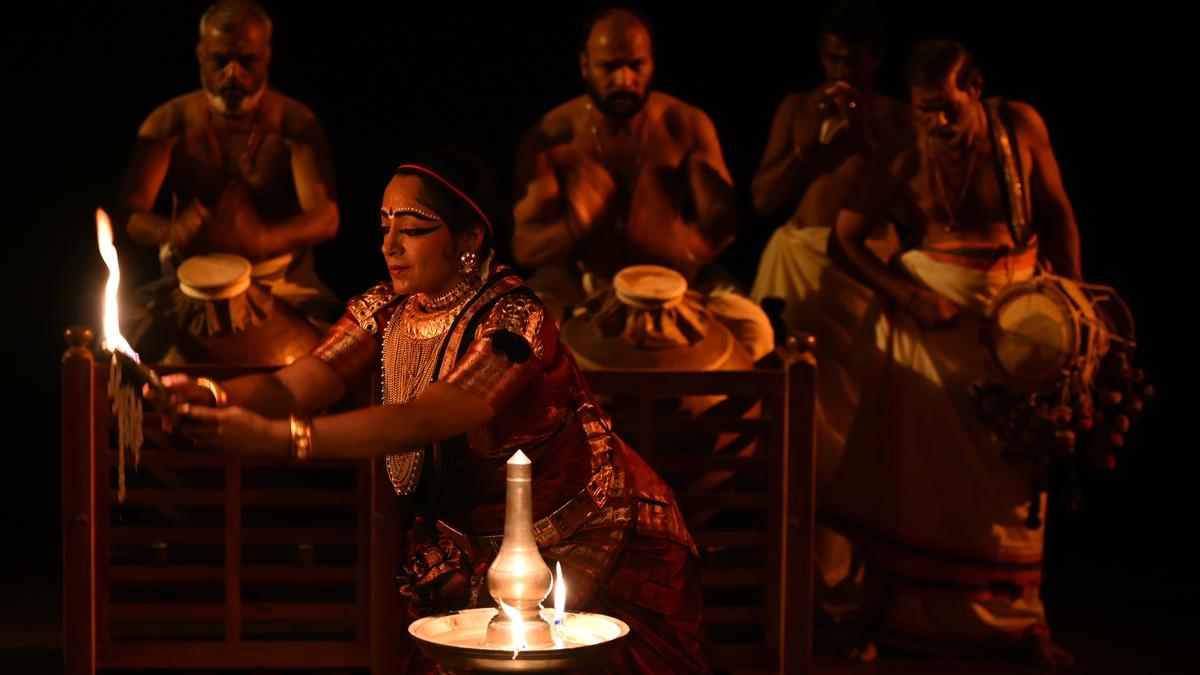
In a groundbreaking development for classical Indian theatre, the ancient Sanskrit drama Mrcchakatikam was recently performed by women artists in the traditional Kerala art form of Koodiyattam. The performance, held on November 11, 2025, at the Kerala Kalamandalam campus in Thrissur, signifies a major leap forward in gender inclusivity for Koodiyattam, which has historically been an exclusively male domain.
Koodiyattam, recognized by UNESCO as a Masterpiece of the Oral and Intangible Heritage of Humanity, is known for its highly stylized narrative techniques and requires rigorous training, often passed down through generations within male Brahmin families. For centuries, women were traditionally barred from performing in this classical Sanskrit theatre, a norm that has slowly started to shift in recent years.
The performance of Mrcchakatikam, often translated as The Little Clay Cart, by a troupe of female artists trained under the expert guidance of renowned Koodiyattam maestro Margi Sathi, was met with critical acclaim. The play, written by the ancient playwright Shudraka, is celebrated for its rich characterizations and vivid depiction of societal themes.
In an interview, lead performer and Koodiyattam practitioner Lekshmi Ramachandran commented, ‘This performance is not just an artistic achievement but a statement challenging the conventional boundaries of our tradition. Women have the talent and dedication to excel in Koodiyattam, and this event reflects the art form’s evolving nature.’
Experts note that integrating women into Koodiyattam performances enriches the art by bringing fresh perspectives and expressions. Dr. Arun Menon, a theatre historian affiliated with the National School of Drama, observed, ‘Mrcchakatikam’s staging by women is a historic milestone that signals progressive changes within classical performing arts, promoting inclusivity without compromising artistic rigor.’
The Kerala Kalamandalam, a premier institution dedicated to preserving and promoting Kerala’s traditional performing arts, has played a pivotal role in nurturing female talent in Koodiyattam. Head of the department, Prof. Meenakshi Nair, stated, ‘Our commitment is to uphold the integrity of Koodiyattam while embracing social evolution. Encouraging women to participate expands the art’s reach and relevance in contemporary society.’
The landmark event has garnered widespread media attention and sparked discussions on gender roles within classical arts across India. It is viewed as an encouraging precedent for other traditional art forms grappling with similar gender disparities.
In conclusion, the staging of Mrcchakatikam by women in Koodiyattam not only preserves a venerable cultural practice but also redefines its parameters to be more inclusive. This historic performance exemplifies the ongoing transformation of India’s classical theatre landscape, offering expanded opportunities for women artists and enriching the art form’s future trajectory.