NASA has successfully flown a jet at 925 miles per hour without producing a disruptive sonic boom, marking a significant breakthrough in supersonic flight technology. This advancement could lead to commercial air travel times being cut by half while minimizing noise pollution.
NASA flies jet at 925 mph without sonic boom, advancing quieter supersonic travel to cut commercial flight times by half and reduce noise pollution.
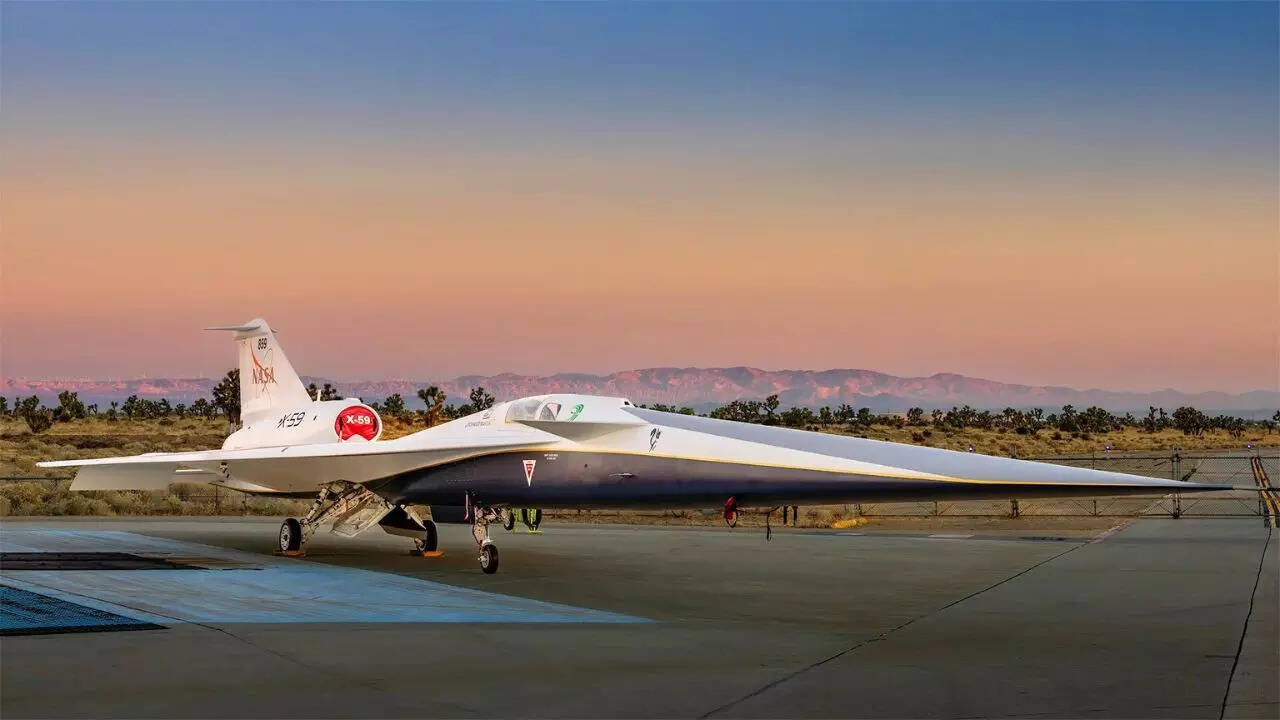
In a landmark achievement for aviation, NASA successfully conducted a flight of its experimental X-59 QueSST jet at 925 miles per hour without generating the traditional loud sonic boom. The flight occurred recently at NASA’s Armstrong Flight Research Center in California, showcasing the agency’s progress toward quieter supersonic travel. Sonic booms, which are shock waves created when an aircraft surpasses the speed of sound, have historically limited the adoption of supersonic jets over land due to noise restrictions and community disturbance. NASA’s breakthrough flight demonstrated that shaping aircraft and controlling shock waves can drastically reduce these sonic booms to a gentle thump, often referred to as a “sonic thump.”
The X-59 QueSST (Quiet Supersonic Technology) program aims to develop technology that will enable commercial airplanes to fly faster than sound without the accompanying disruptive noise. NASA officials stated that this flight represents a major step towards making supersonic travel over land feasible. Dr. Michael Krainak, senior technologist for NASA’s Aeronautics Research Mission Directorate, noted, “This successful supersonic flight will allow us to proceed with community testing and regulatory approval, which are crucial for future commercial supersonic aircraft.”
Traditional supersonic aircraft like the Concorde generated loud sonic booms that led to bans on supersonic flights over populated areas, limiting their route options. The ability to minimize or eliminate disruptive sonic booms could unlock faster commercial routes and significantly shorten international travel times. For instance, a flight from New York to London could be reduced from seven hours to approximately three and a half. Airlines have expressed considerable interest in supersonic technology for this reason, with several manufacturers working on next-generation supersonic jets.
The technology behind the quieter sonic footprint involves reshaping the jet’s nose and body to manage shock waves more effectively. The unique design of the X-59 reduces the strength of pressure waves created during supersonic flight. NASA plans to validate these results with community overflights and gather feedback to inform future regulations. The Federal Aviation Administration (FAA) is closely monitoring this technology as it could influence policy changes regarding supersonic flights over land.
NASA’s achievement is part of a broader initiative to enhance aeronautics and reduce environmental impact, as quieter supersonic jets could coexist harmoniously with populated areas without noise complaints. This also aligns with goals to improve fuel efficiency and reduce carbon emissions by shortening flight durations. The success of the X-59 flight adds momentum to ongoing research and development by both public and private sectors in supersonic aviation.
In summary, NASA’s recent jet flight at 925 mph without producing a disruptive sonic boom represents a pivotal advancement in the quest for quiet supersonic travel. This technological breakthrough could revolutionize commercial aviation by drastically reducing travel times and noise pollution, pending regulatory approvals and further testing.