The November 2025 supermoon, known as the Beaver Moon, will be the closest and brightest full moon of the year. Observers worldwide can witness this lunar phenomenon with optimal viewing tips and timings provided.
Witness the November 2025 supermoon, the year’s closest and brightest full moon known as the Beaver Moon. Learn when and how to watch this stunning lunar event.
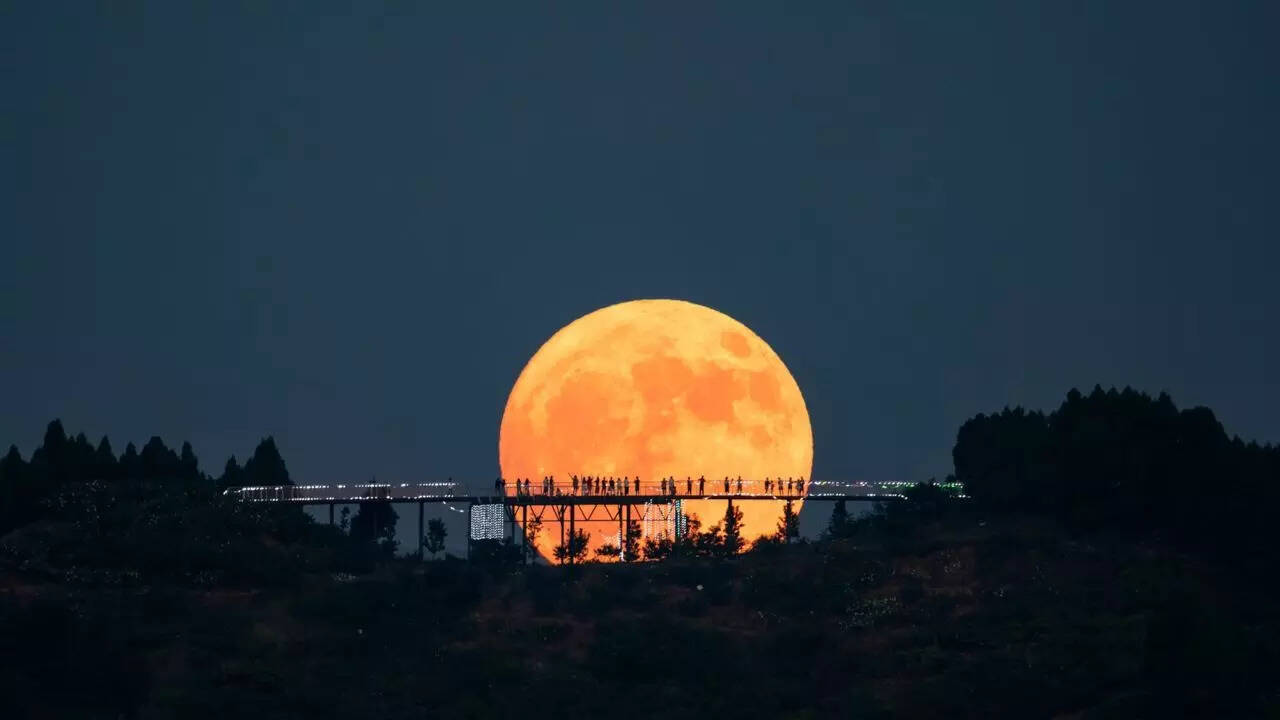
The November 2025 supermoon, also referred to as the Beaver Moon, is set to captivate skywatchers around the world as the closest and brightest full moon of the year. This celestial event will occur on November 7, offering an exceptional opportunity to observe the moon appearing larger and more luminous than usual. The supermoon phenomenon happens when a full moon coincides with the moon’s closest approach to Earth in its elliptical orbit, known as perigee.
Understanding the Beaver Moon
Traditionally named by Native American tribes and colonial settlers, the Beaver Moon derives its name from the time of year when beavers prepare for winter. November’s full moon marks a period of increased activity for beavers building dams, hence the moniker. This cultural heritage adds a layer of historical significance to the astronomical event.
When and Where to Watch
The peak of the November 2025 supermoon will occur on the evening of November 7, although the full moon phase technically begins on November 8. The best viewing times will vary based on geographic location but generally align with moonrise in each region. In North America, moonrise is expected around sunset, providing a striking view as the supermoon climbs the horizon. Weather conditions and local light pollution levels will also influence visibility.
How to Get the Best View
Experts recommend finding a clear, unobstructed vantage point away from city lights to fully appreciate the supermoon’s brilliance. Using binoculars or a telescope can enhance details like lunar craters and surface textures. Photographers aiming to capture the supermoon should employ a tripod, adjust camera settings to lower ISO, and experiment with different focal lengths to best capture the moon’s grandeur. Additionally, patience and timing are key, as the moon’s appearance changes quickly during moonrise.
Scientific Significance
Supermoons offer valuable opportunities for astronomers and casual observers alike to study lunar features under favorable lighting conditions. The proximity during perigee allows detailed observations that are not as easily achieved during standard full moons. Moreover, the gravitational effects of a supermoon can slightly influence tides, although these variations are generally subtle.
Public Engagement and Events
Various astronomy clubs and observatories worldwide are expected to host special viewing events around the November supermoon. These gatherings often include educational talks, guided telescope viewing, and activities for all ages, making the event accessible to the general public.
Conclusion
The November 2025 Beaver Moon supermoon represents the closest and brightest full moon sighting opportunity of the year. Occurring on November 7-8, it combines cultural significance with scientific interest, appealing to a broad audience of sky enthusiasts. Ideal viewing requires clear skies and minimal light pollution, ensuring that this lunar spectacle is not missed.