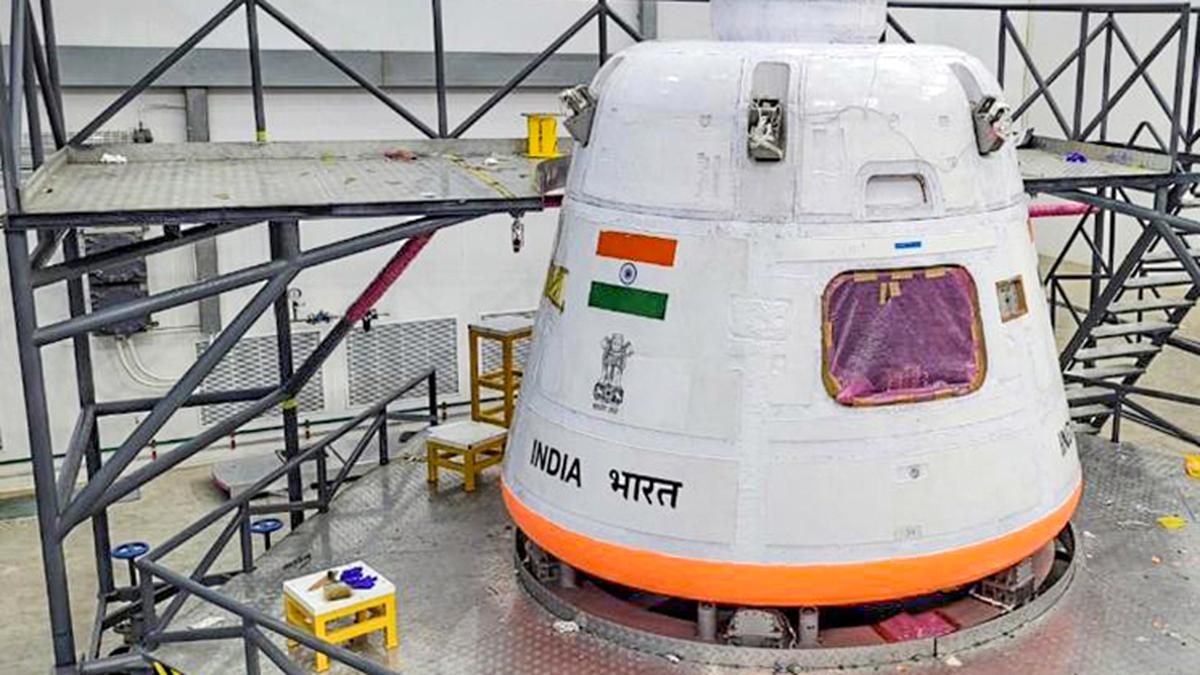
India’s Gaganyaan mission employs a state-of-the-art Crew Escape System (CES) designed to safeguard astronauts during emergencies. The CES mechanism enables rapid ejection and safe distancing of the crew module from the launch vehicle in critical situations.
Explore how India’s Gaganyaan Crew Escape System ensures astronaut safety by enabling rapid evacuation during emergencies in space missions.
India’s ambitious Gaganyaan mission, aimed at sending its first astronauts into space, features a critical safety technology known as the Crew Escape System (CES). Developed by the Indian Space Research Organisation (ISRO), the CES is engineered to protect astronauts by swiftly separating the crew module from the launch vehicle in the event of emergencies during launch or ascent.
The CES is an integral part of Gaganyaan’s safety architecture, ensuring the astronauts’ survival in scenarios such as rocket malfunctions or explosions. The system activates automatically or manually if sensors detect anomalies, initiating a rapid ejection sequence. This sequence uses powerful solid-propellant motors to pull the crew module away from the main rocket at high speed, minimizing exposure to hazardous conditions.
Once separated, the crew module deploys parachutes that facilitate a controlled descent back to Earth. The safe landing is further aided by shock absorbers to cushion impact, thereby maximizing crew survivability. The entire operation is designed to be completed within seconds, reflecting the urgency of life-threatening contingencies during launch.
ISRO’s CES design draws from international best practices, incorporating rigorous testing phases including pad abort tests and in-flight abort simulations. These tests have demonstrated the system’s reliability under high-stress conditions, reinforcing confidence in astronaut safety protocols. According to ISRO officials, the CES represents a critical milestone towards realizing India’s manned spaceflight ambitions.
The Gaganyaan mission itself seeks to showcase India’s capability to conduct human spaceflight missions independently. Scheduled for launch in the coming years, the mission will send a crew of astronauts into low Earth orbit for a determined period. The presence of the CES underscores ISRO’s commitment to mitigating risks associated with such pioneering endeavours.
In addition to technological readiness, ISRO continues to focus on astronaut training and mission planning, ensuring comprehensive preparedness. Collaborative efforts with international space agencies have provided valuable insights that have informed the design and operation of safety systems like the CES.
Overall, the Crew Escape System stands as a vital safeguard within the Gaganyaan mission framework, reflecting India’s growing expertise in space technology and its dedication to astronaut safety. As the mission progresses toward launch, the CES will remain central to protecting human life beyond Earth’s atmosphere.