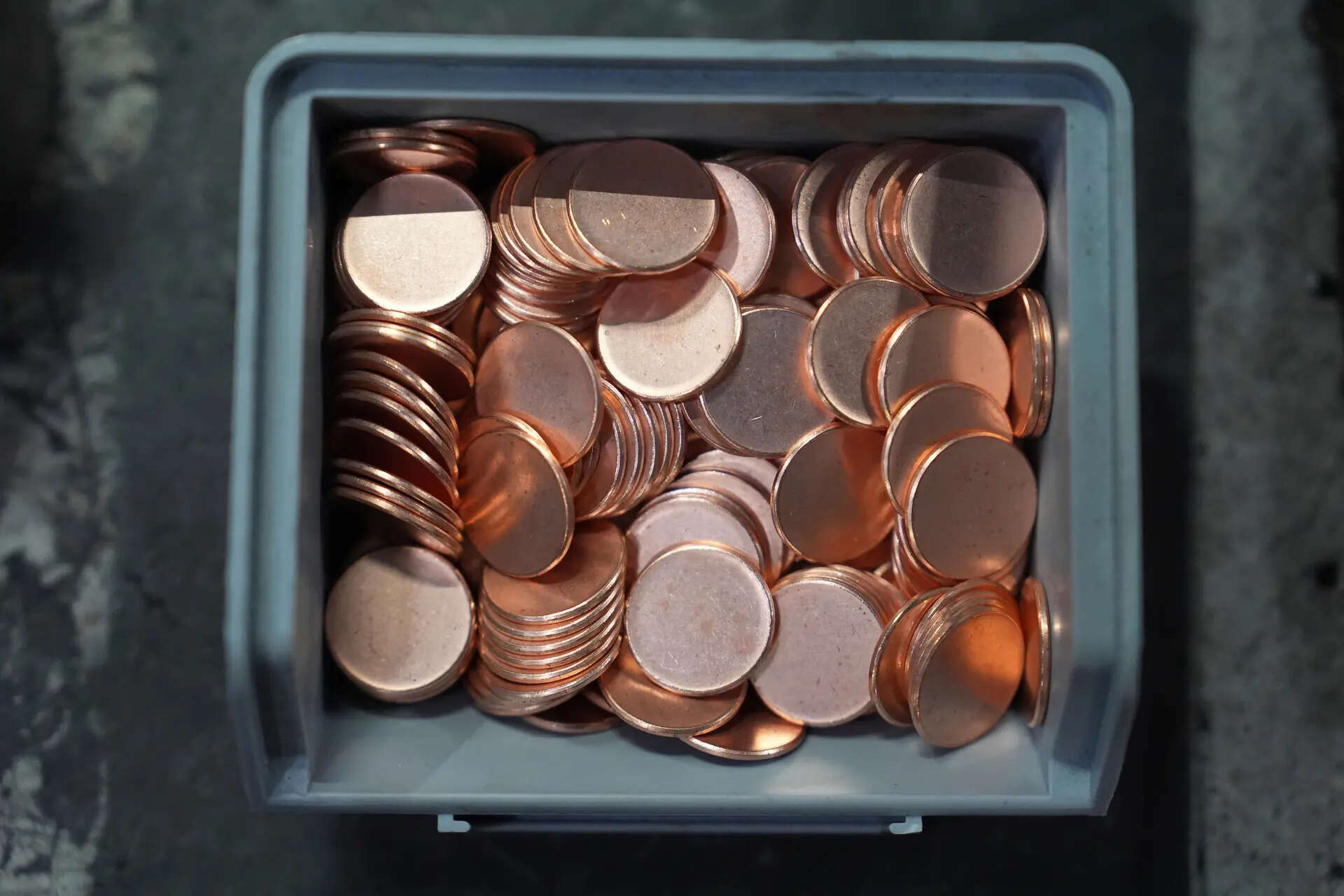
The US penny, a staple of American currency for 238 years, has been officially retired after the last coin was minted at the Philadelphia Mint. The coin’s phase-out follows a directive issued during former President Donald Trump’s administration to cease penny production due to its declining economic viability.
The US penny, in circulation for 238 years, is retired after the last coin was minted in Philadelphia following a policy initiated during Trump’s presidency.
Philadelphia — The United States has officially bid farewell to the penny after nearly two and a half centuries in circulation. On November 12, 2025, the United States Mint struck the final one-cent coin at the Philadelphia Mint, marking the end of production of the 238-year-old currency. This historic move follows a directive initiated during former President Donald Trump’s administration aimed at retiring the penny owing to its dwindling economic value and practicality.
The penny has long been a symbol of American currency since its first issue in 1787. However, over the years, the cost of producing the coin has exceeded its face value, making it increasingly uneconomical to continue minting. According to the US Mint, each penny currently costs approximately 3 cents to produce, primarily because of rising metal prices.
Trump Administration’s Role in Penny Retirement
The decision to end penny production was formally set in motion during Donald Trump’s presidency, when his administration issued directives to reassess the continued viability and efficiency of the one-cent coin. The initiative aimed to eliminate the penny to save taxpayers money on production costs and reduce inefficiencies in everyday commerce.
The directive sparked debates among policymakers, economists, and the public, with proponents arguing that retiring the penny would streamline transactions and save millions annually. Opponents, however, expressed concerns about potential impacts on pricing and cash transactions, particularly affecting low-income populations.
Economic and Practical Implications
With the penny’s removal from circulation, cash transactions will now be rounded to the nearest five cents. This rounding mechanism aims to smooth out transactions without adversely affecting consumers or retailers. Several other countries, including Canada, Australia, and New Zealand, have successfully phased out their one-cent coins with minimal disruption.
Retailers and financial institutions across the United States have been preparing for this transition. Digital payment methods, which have reduced reliance on physical coins, further facilitate the change. Nevertheless, the US Treasury and Federal Reserve have assured that change management and public education campaigns will be implemented to ease the transition.
Historical Significance
The US penny has retained significant historical and cultural value. Featuring Abraham Lincoln’s profile since 1909, it has been woven into American heritage and folklore, including the popular practice of wishing upon a penny for good luck.
Collectors may now place even greater value on pennies, especially those from early years or rare minting errors. The final batch minted in Philadelphia is expected to become a valuable commemorative item.
Conclusion
The retirement of the US penny after 238 years marks an end of an era for American currency. Driven by economic considerations and policy directives issued during the Trump administration, the decision aims to reduce costs and modernize the monetary system. While the penny has been a longstanding feature of everyday transactions, the transition is expected to be smooth, aided by rounding rules and increasing digital payment adoption. As the nation moves forward without its smallest denomination coin, the legacy of the US penny will endure in history and collective memory.