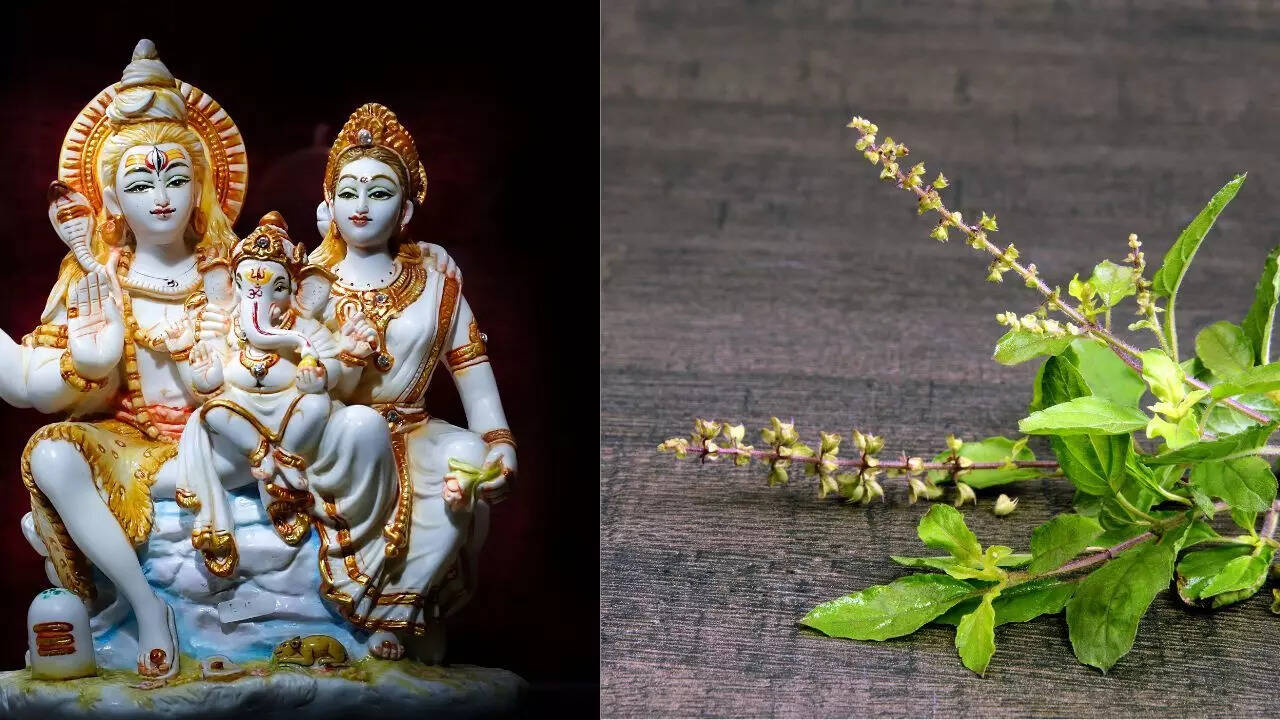
Tulsi, a sacred plant in Hinduism, is commonly offered to deities like Lord Vishnu but traditionally not to Lord Shiva and Lord Ganesha. This practice stems from religious texts and cultural beliefs that explain the significance and appropriateness of specific offerings to different gods.
Explore the traditional reasons why Tulsi is not offered to Lord Shiva and Lord Ganesha in Hindu worship, reflecting ancient rituals and beliefs.
In Hindu worship, offerings to deities hold profound religious significance, symbolizing devotion and adherence to ancient traditions. One question that often arises among devotees and scholars alike is why Tulsi (holy basil), a revered and sacred plant, is customarily not offered to Lord Shiva and Lord Ganesha, despite its importance in many other rituals.
Tulsi is widely known for its sacred status in Hinduism and is especially revered in the worship of Lord Vishnu and his incarnations such as Krishna and Rama. It is believed that Tulsi leaves, which are associated with purity and spiritual power, are highly favored by Vishnu. Temples dedicated to Lord Vishnu routinely include Tulsi in their offerings and rituals, underlining its spiritual significance within this tradition.
In contrast, traditional Hindu practices observe that Tulsi is not presented to Lord Shiva and Lord Ganesha during worship. The reasons behind this are rooted in scriptural beliefs and mythological narratives. According to various Hindu scriptures and folklore, Lord Shiva’s preferred offerings include Bilva (Bael) leaves, which are considered auspicious and carry symbolic meanings related to his divine attributes. Bilva leaves are believed to represent the three eyes of Shiva and his trident, making them especially sacred in Shaivism.
Similarly, Lord Ganesha, the remover of obstacles and symbol of wisdom, is traditionally offered Durva grass, modaks, and red flowers during worship. Devotees typically avoid Tulsi in Ganesha pujas as it is thought to be unsuitable based on scriptural injunctions and cultural customs.
Religious scholars emphasize that the distinct preferences for offerings among Hindu gods reflect their unique identities and mythological backgrounds. The differentiation in worship practices underlines the importance of respecting traditional knowledge when performing rituals.
Dr. Ramesh Chandra, an expert in Hindu theology, explains, “Offering the correct items to each deity is a reflection of religious discipline and understanding. Tulsi, while sacred, is connected specifically to Vishnu’s mythology and spiritual symbolism, which does not extend to Shiva or Ganesha. This distinction preserves the sanctity and intent of the respective rituals.”
Furthermore, some legends narrate that Tulsi was once married to Lord Vishnu’s avatar, which reinforces the plant’s special status in Vaishnavism. Such stories help devotees comprehend the sacred relationships that govern ritual practices.
Despite the differentiation in offerings, the intent behind all rituals in Hinduism remains devotion, purity, and reverence. Understanding the traditional contexts of these practices enables devotees to connect more deeply with their faith.
In conclusion, Tulsi’s absence from the offerings to Lord Shiva and Lord Ganesha results from deep-rooted religious traditions and scriptural guidance. While Tulsi is highly honored in worship of Vishnu and his avatars, the customary offerings to Shiva and Ganesha align with their unique spiritual identities, underscored by the use of Bilva leaves and Durva grass respectively. This differentiation highlights the rich diversity and symbolism embedded in Hindu ritual worship.